
Defining delivery areas
A marketing map does not replace an agreed service-area list. Confirm which neighbourhoods and postal codes are actually accepted.
NOVEMBER 5, 2026 EDITION · PRACTICAL FIELD NOTES
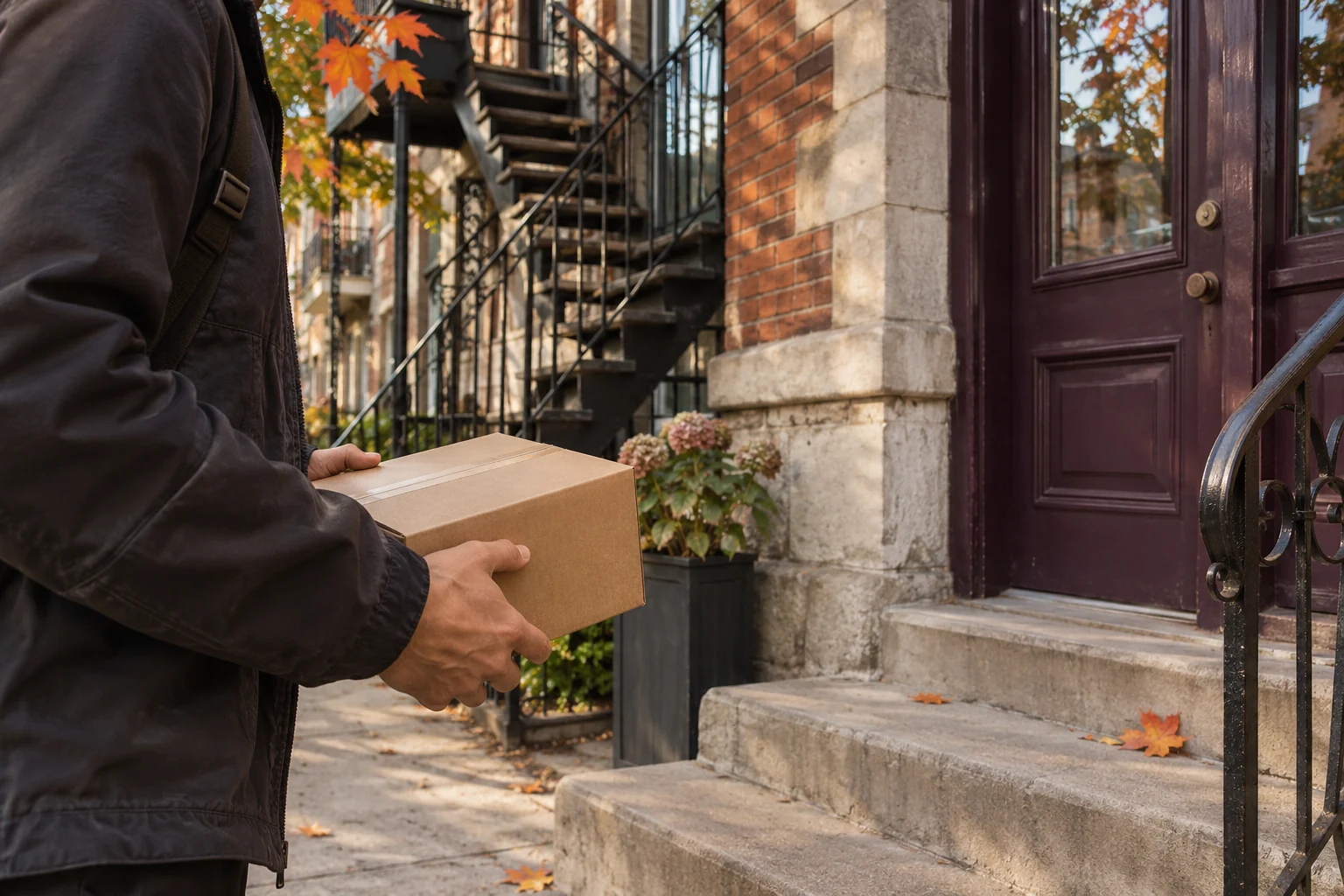
Begin with actual destinations
A useful local-delivery area starts with your customers and receiving needs, not a circle drawn around the shop. List the general sectors, receiving types and requested days. Ask which scope can be reviewed before advertising it as available. A postal prefix can help group enquiries but cannot describe every street, entrance or opening window. Keep geography connected to the actual receiving point.
Keep three working categories
Separate the agreed scope, addresses requiring review and destinations outside the current arrangement. These are merchant planning categories, not service zones advertised by this website. Give sales staff a clear way to escalate a new address. Keep the accepted list current when the operating arrangement changes. Do not infer coverage in Laval, on the South Shore or across Québec merely from a request described as Montréal delivery.
Look beyond distance
Two nearby stops can need different work: an office reception, a residential unit or an appointment at a receiving entrance. Record the constraint instead of a speculative travel time. For Montréal access planning, the City advises checking the posted parking rules for the location, day and time. Temporary snow-removal signs can take priority over permanent signs. Verify the situation for the movement instead of assuming a parcel address grants permission to stop. Official references are below.
Align the sales message with accepted scope
Choose how your team checks eligibility before offering a local-delivery option. A manual process can be appropriate when no storefront integration has been agreed. Tell customers when they are requesting a review and when an arrangement is confirmed. Review new destination enquiries and repeated access issues periodically; an enquiry is not proof of completed demand. Provide the pickup sector, general clusters, formats and receiving windows for a service-area discussion.
Check your brief
- Start with destination patterns, not assumed boundaries.
- Keep accepted and unreviewed addresses distinct.
- Record receiving constraints and changes.
- Publish only the scope and promise actually confirmed.
Before the first dispatch
- Compile representative destinations
- Verify zone limits and exclusions
- Confirm slots before displaying them at checkout
A worksheet for the handoff
Download the blank CSV worksheet and adapt it to your process. Downloading sends no worksheet data. Keep completed recipient information in your approved systems, out of the public inquiry form.
Practical questions
Does a postal prefix guarantee eligibility?
No. The destination and its receiving conditions must fit the scope explicitly agreed with the operator.
Can another area be added later?
It can be proposed for review. Confirm revised scope and conditions before offering it to customers.
Pricing, hours, areas, integrations and acceptance are all subject to confirmation. Fragile, battery-containing and restricted shipments must be declared and reviewed before acceptance.
NEXT / 05
Ready to plan the next round?
Tell us about your locations, volumes, schedule and exceptions. We can help clarify the request; any service proposal must still be confirmed.